
qEEG: Everything You Need to Know About Brain Mapping
A qEEG is a safe, non-invasive form of brain mapping. It utilizes electrodes, or sensors, placed on the scalp to map the frequencies and amplitudes of brain activity at specific points throughout the brain. By quantifying these characteristics, we can develop a personalized neurofeedback protocol for each of our clients, targeting their areas of need in order to alleviate negative symptoms.
What Is a qEEG?
A qEEG, or Quantitative Electroencephalogram, is a computerized analysis of brainwave activity. Using small sensors attached to a stretchable cap, data is collected and compared to data in a normative database to identify brainwave patterns linked to a person’s symptoms. This determines how a client’s brain activity differs from the standardized norm within their demographics.
qEEGs are non-invasive, as the sensors rest on the scalp to measure brain wave activity. They don’t involve the transmission of electricity into the brain, but rather, they measure the electrical activity already present in a person’s brain, similar to how your blood pressure is taken at the doctor’s.
What Does a qEEG Measure?
A qEEG evaluates the speed, strength, and coordination of your brain’s electrical activity. When millions of neurons communicate, they produce rhythmic electrical patterns known as brainwaves. The qEEG measures three primary elements:
1. Brainwave Frequencies (Speed)
The brain operates across different frequency bands (measured in Hertz, or cycles per second). A healthy brain shifts between these frequencies depending on the task:
- Delta (0.5 – 4 Hz): The slowest brainwaves, dominant during deep, restorative sleep and physical repair.
- Theta (4 – 8 Hz): Associated with daydreaming, creativity, and the transition into sleep. Excess daytime theta can show up as inattention, spacing out, or brain fog.
- Alpha (8 – 12 Hz): The brain’s “idle gear” or bridge state—relaxed, calm, and present without active processing.
- Beta (12 – 30 Hz): Fast waves associated with active focus, problem-solving, and external engagement. High amounts of fast beta can correlate with anxiety, rumination, or muscle tension.
- Gamma (30+ Hz): The fastest wave patterns, responsible for high-level information processing, memory consolidation, and cognitive integration.
2. Amplitude & Absolute Power (Strength)
Power measures how much energy or “volume” is present in each frequency band across different regions of the scalp. The qEEG identifies whether specific brain areas are operating with too much energy (hyper-activated) or too little energy (hypo-activated) compared to normative age-matched baselines.
3. Coherence & Connectivity (Communication)
Your brain functions as a complex network. The qEEG measures how well different regions share information:
- Hyper-coherence: Areas of the brain are overly “locked together” or cross-talking too much, making it harder for specific networks to work independently (often seen in cognitive inflexibility or overthinking).
- Hypo-coherence: Areas are not communicating efficiently with one another, which can impact processing speed, multitasking, or executive function.
Is a qEEG Safe?
Yes, qEEGs are entirely safe as they are non-invasive and painless. The scalp sensors used throughout the process only record data, and do not transmit electricity into the brain.
How Is a qEEG Different from a Regular EEG?
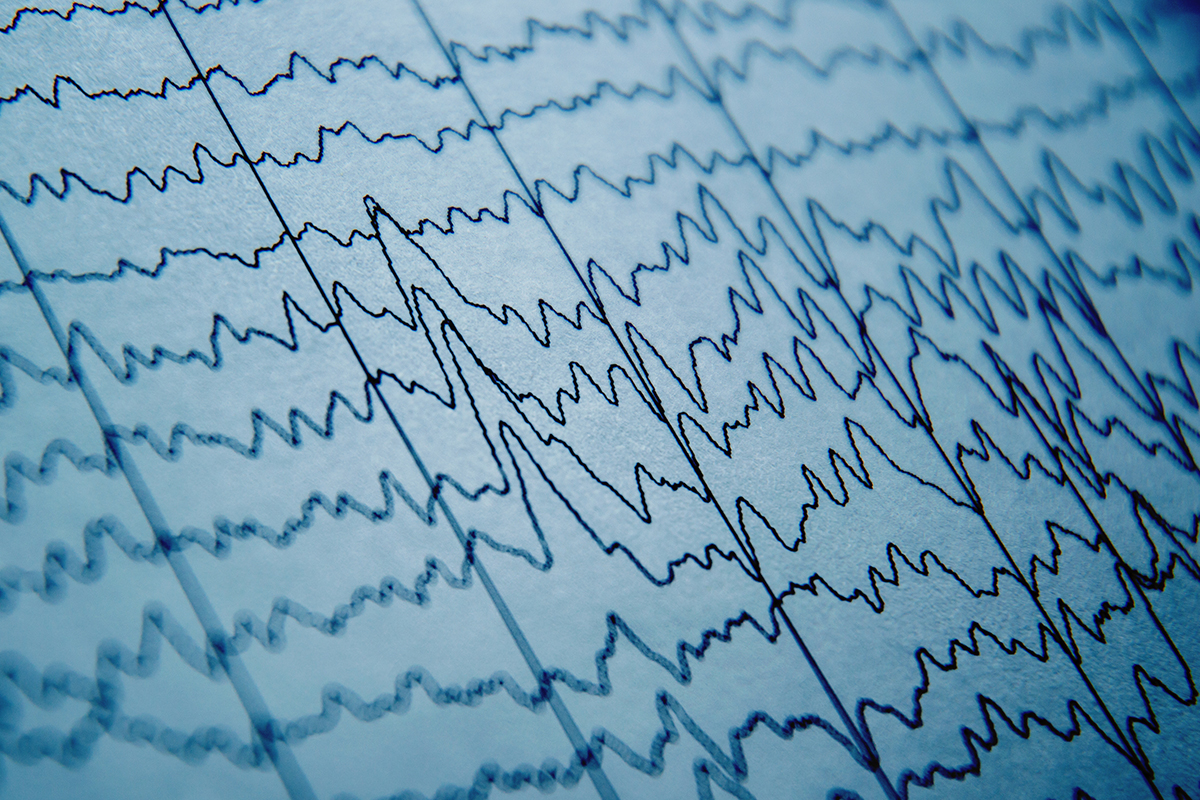
If you’ve seen the term ‘EEG’ before, you may be wondering what the difference is between EEGs and qEEGs. While an EEG is the raw recording of brainwave frequency and amplitude data, a qEEG gathers this data and utilizes statistical analysis to quantify how different the activity is from the optimal range of a person’s demographics. With this, we can develop a color-coded brain map that visually represents a person’s brain activity and overall connectivity. Utilizing a color scheme within the brain map reports, we can then detect a brain’s overactivation and under activation.
What Conditions Can a qEEG Help Evaluate?
A qEEG can help evaluate a multitude of symptoms and conditions such as:
- Attentional challenges/ADHD
- Executive Dysfunction
- Autism Spectrum Disorder
- Anxiety
- Depression
- Trauma/PTSD
- Rumination
- TBI (Traumatic Brain Injury) & Concussions
While a qEEG is a good way to determine how certain symptoms may be correlated to brain activity, it is only an assessment aid rather than a standalone diagnostic tool. The quantified data is simply used to guide individualized Neurofeedback treatment planning. In other words, we do not diagnose using a qEEG.
Will a qEEG Diagnose My Condition?
A qEEG does not diagnose mental health or neurological disorders. Instead, it provides objective data that clinicians interpret within a broader clinical picture. This means that we utilize qEEG results to understand how a client’s symptoms or diagnoses may be correlated with their brain wave activity. We then use this information to determine how these symptoms can be alleviated by targeting specific brain regions, neuronal pathways, or brainwave patterns. Depending on findings and/or the consultation, you may be redirected to a neurologist, sleep specialist, or another medical intervention before starting neurofeedback.
What Happens During a qEEG Assessment?
First, the client’s head is measured, and the appropriately sized cap is selected for them. This ensures that the cap does not cause any discomfort for the client during the qEEG process. The cap holds the sensors, and wires connect each sensor to a computer. Two sensors will also be clipped on the ears to serve as a reference point for data collection, which are then connected to the cap.
Next, conductive gel is dispensed on the sensors and into small openings within the cap using a blunt applicator. Although the sensors are small, a generous amount of gel is needed to ensure the signal quality at each point on the scalp is strong enough. Clients should be aware that their hair will get messy during the process. If you wish, we recommend bringing a hat to wear after the session. At Cognitive Solutions LC, we will provide a warm towel to aid in removing the gel.
Once the sensors’ signals look strong enough, the actual data collection process begins. Since brainwave activity looks different depending on whether a person’s eyes are open or closed, two sessions are performed to accommodate this, with each session lasting about 10 minutes. Clients will be asked to keep their eyes open for one and close their eyes for the other. No tasks are conducted during these recordings.
While qEEG appointments are booked for an hour to accommodate any technical difficulties that may occur, the actual process is typically completed under 40 minutes. Other than keeping their eyes open or closed and sitting in a still, relaxed position, a qEEG requires no conscious effort from clients. During their qEEG, clients will be asked to turn off/silence and put away their devices to limit distractions and reduce potential interference during data collection.
How Long Does It Take to Get qEEG Results?
qEEG results are typically provided approximately one week after the recording session.
What Do qEEG Results Look Like?
qEEGs provide us with an accurate brain map report for each individual client. These maps are color-coded using warm and cool tones to display areas where brainwave activity may be slower or faster than ideal. Cool tones indicate where the brain is under activated, while warm tones indicate where the brain is overactivated.
Outside of displaying activity at specific points in the brain, the qEEG also provides information on imbalances, as well as the strength of connectivity between brain regions. The qEEGs allow us to see where a client’s brain communication may be too strong or too weak, and relates this to specific brainwave frequencies in those areas.
Neurofeedback treatment aims to utilize this information to develop a protocol that rebalances this brain communication to alleviate a client’s symptoms. qEEG results are interpreted alongside a client’s clinical and symptomatic history to ensure that an accurately personalized treatment plan is developed. Results are typically reviewed and provided approximately one week after the recording session.
How Are the qEEG Results Used in Neurofeedback?
qEEG brain map results are used to design a targeted neurofeedback protocol. These protocols focus on specific brain regions or brainwave frequencies associated with the client’s symptoms. Since the qEEG interprets the strength and also the speed of brain activity, we are able to determine which brain regions have connections that are too strong or weak, as well as how the presence of certain brainwaves may be contributing to this.
Using this information, we can create a personalized protocol for each client that targets the areas they need support with. Since the brain’s connections are constantly changing and developing, neurofeedback protocols may be altered throughout the course of treatment to ensure the client’s needs are continuously being met.
How Should I Prepare for a qEEG?
- Wash hair the night before (ensure no conditioner or products are in the hair)
- Ensure the scalp is dry and clean before the appointment
- Avoid caffeine on the day of the qEEG
- Get a normal amount of sleep
- Use any other medications as normal besides stimulant medications. Do not take any stimulants on the morning of the qEEG.
Ready to Schedule Your qEEG Assessment?
A qEEG is incredibly insightful for obtaining objective brain data that identifies areas of atypical brain activity which may be contributing to a client’s symptoms. Results are fully dependent on a person’s own brain activity, allowing us to gain personalized insights into how these manifestations may be correlated with client concerns. This information subsequently guides an individualized neurofeedback plan that aims to alleviate a client’s symptoms. If you are interested in pursuing neurofeedback with Cognitive Solutions LC, click here to schedule your initial consultation and qEEG. We can’t wait to help you get started!
Related Posts

How do Auditory or Visual Processing Disorders Impact Reading Development in Children?
For all children, the acquisition of reading skills plays a crucial role in...
Flying Under the Radar: How Unrecognized Traumatic Brain Injury Can Lead to Loss of Life
The time is now to discuss your health and here’s why. - In addition to...

Exercise for Depression
“Mens sana in corpore sano” Exercise to Treat Depression and Improve Overall...

How Do Executive Functioning Problems Affect Adults?
In the grand tapestry of life, two essential domains often stand out: our careers...